|
Main Contents Page
About Information Literacy
STEP 1: STARTING out
STEP 2: FINDING
STEP 3: EVALUATE
STEP 4: Legal & ethical USE
STEP 5: COMMUNICATE
- Writing an essay/assignment
- Tips for presentations
- Tips for posters
Planning
Layout
Colour
Text and font
Visuals
Other useful web site
- Tips for brochures
- Tips for displays
- E-communication guidelines
- Writing styles
- Quiz |
 |
Planning your poster
Before you rush to your computer and start designing your poster, there
are a couple of things you need to do first. Planning your poster is
extremely important.
- Start by writing down everything you would like to have on
your poster, keeping in mind who your target audience is.
- Draw your poster on a piece of paper, adding all the different
sections and headings you would like to cover in your poster as well
as the text. Let someone proofread for grammatical and spelling mistakes.
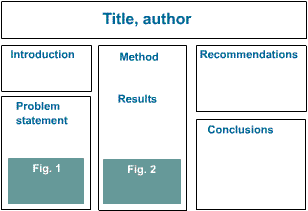
Example for headings are:
- title (the audience
will view this first);
- introduction
- problem statement
- method
- results
- recommendations
- conclusion
Your drawing might look something like this:
- Eliminate any poster "noise". Remember you have
less than 3 seconds to draw the attention of your audience to your
poster. Poster noise happens when you add irrelevant or unnecessary
information to your poster, e.g. information your audience might already
know, etc. - this will depend on your target audience (colleagues,
other specialists in this field, general public, etc.).
- Have some attention grabbers on your poster. Seeing that
you don't have a lot of time to get the attention of your audience
you need to make a quick impact, e.g. a catching and interesting statement,
photographs, graphics, colours, layout, etc. - all of these play a
role in attracting your audience.
- When you have finished your final design on paper, you can start
designing it on the computer.
|
|
|
|