Information finding tools
- OPAC
- Internet
Information sources
- Books
- Periodicals/Magazines/Journals
- Internet
- Conference proceedings/reports
- Maps
- Museums
- Archives
- Quizz

Archives
What is an archive?
An archive is a "place in which collected public or corporate records are kept; a data bank; a repository for documents."
(The new shorter Oxford English dictionary. 1993. New York: Oxford University Press.)What type of information is available at an archive?
Archives preserve documentation and material from the past for the future. An archive preserves mostly paper-base materials like photographs, original or copied documentation as well as film and sound recordings.
Many companies also have in-house archives where they keep all their historic documents and information that they would like to keep for future references.
Location of national archives
These are just two examples of national archives.
National Archives of South Africa, Head Office The National Archivist Postal address: Private Bag X236, PRETORIA 0001
Street address:
24 Hamilton Street, Arcadia, PRETORIA
Tel: (012) 323 5300. Fax: (012) 323 5287Cape Town Archives Repository The Head Postal address:
Private Bag X9025, CAPE TOWN 8000 Street address:
72 Roeland Street, CAPE TOWN
Tel: (021) 462 4050. Fax: (021) 45 2960Other useful links:
(These are Internet links, your computer must be connected for you to have access to them.)For more information on the archives in South Africa see National Archives of South Africa (NASA).
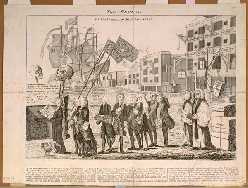
Acknowledgement: Image - www.loc.gov/exhibits/british/ britobje.html